
Cool Flow
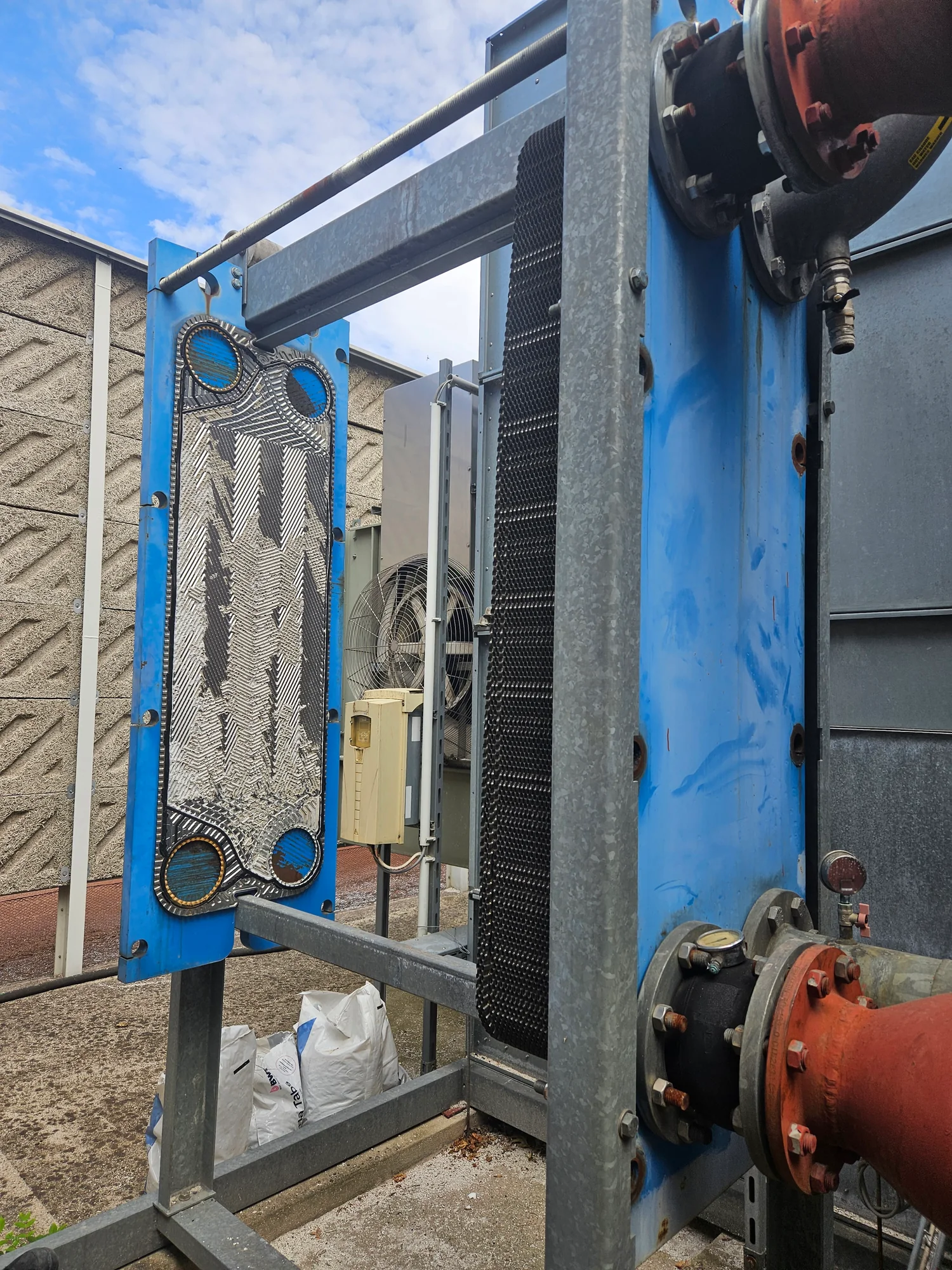
Dismantled blue plate heat exchanger during on-site technical work

Related industrial cooling technology

Plate Heat Exchangers

We support technical projects involving the inspection, cleaning, repair, refurbishment and replacement of plate heat exchangers. Whether the issue is reduced thermal performance caused by fouling, gasket-related problems or an ageing unit, the appropriate course of action depends on the exchanger's condition and operating requirements.

  • Assessment and diagnostics
  • Cleaning and refurbishment
  • Parts support
  • New equipment and installation

Technical decision

When Heat Transfer Performance Declines

Fouling and deposits can reduce heat transfer efficiency, increase pressure drop and affect the performance of the wider cooling or heating system. A proper assessment helps determine whether cleaning, repair or another intervention is required.

  • Reduced heat-transfer performance
  • Increasing pressure drop
  • Fouling or scaling
  • External or internal leakage
  • Damaged plates or ageing gaskets
  • Recurring contamination
  • Changed operating conditions
  • Obsolete or undersized equipment

Depending on the findings, the technically and economically sensible route may be cleaning, repair, refurbishment, partial component replacement or complete equipment replacement. Not every heat exchanger can be refurbished safely or reasonably.

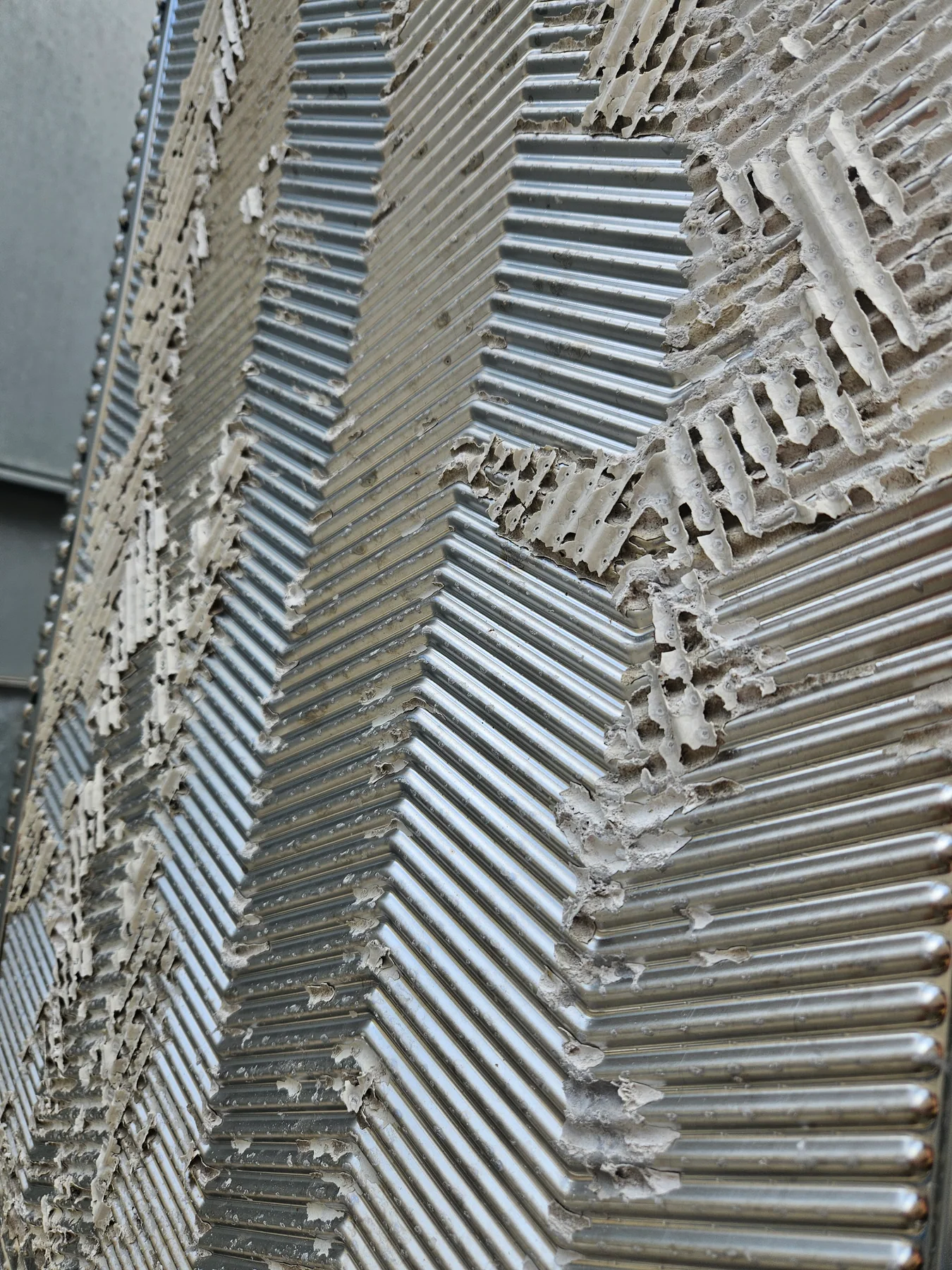
Close-up of a plate heat exchanger surface affected by deposits

Complete service scope

Cleaning, Gasket Replacement and Refurbishment

For gasketed plate heat exchangers, the condition of the plates and gaskets is critical. Depending on the equipment and its condition, maintenance may involve dismantling, cleaning and inspecting the plates, replacing damaged components, and reassembling and checking the unit in accordance with manufacturer requirements.

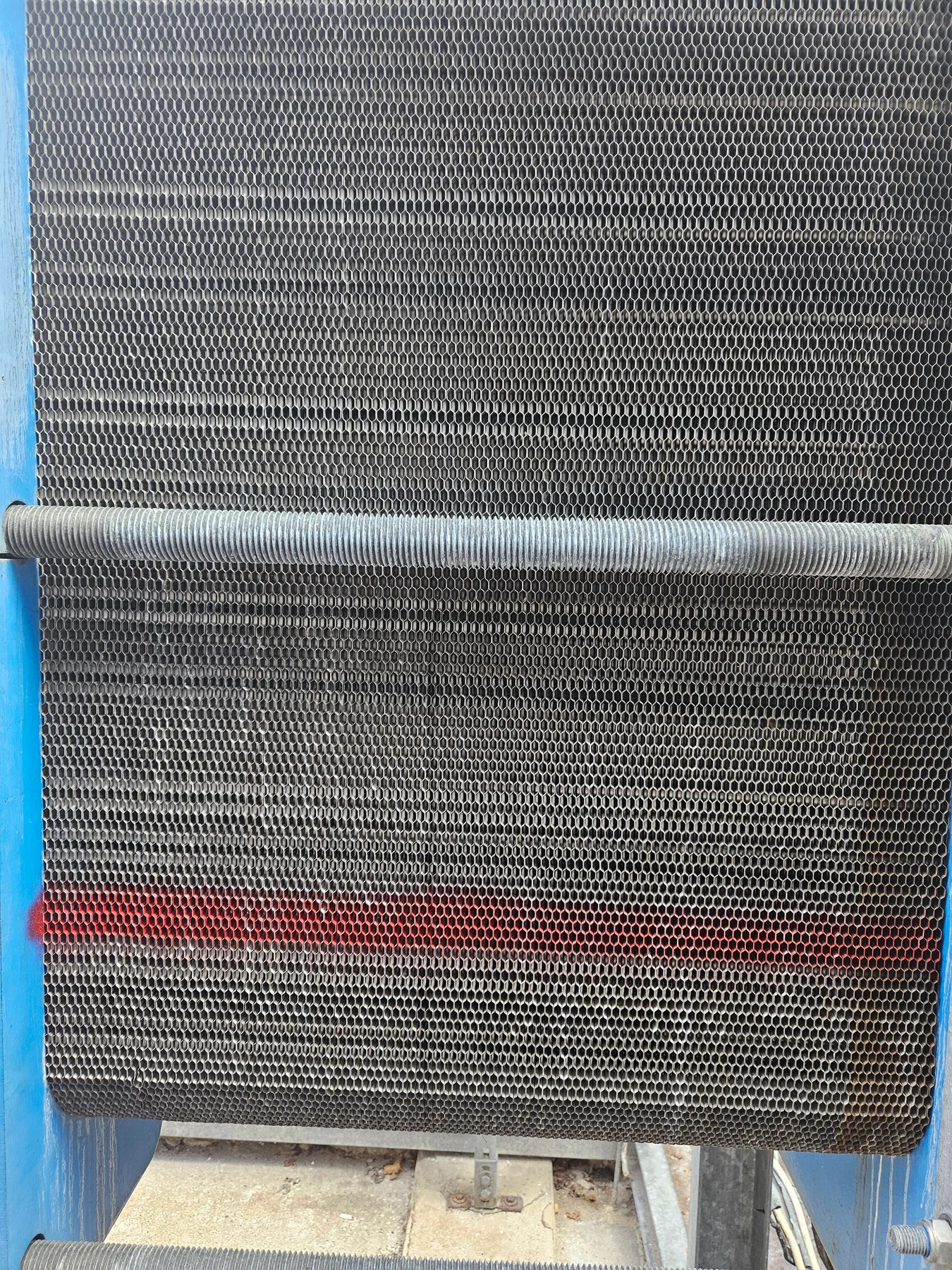
Detailed view of a plate heat exchanger heat-transfer surface

Assessment and diagnostics

We use the observed operating issue, available data and equipment condition to define further inspection needs and possible intervention routes.

  • Review of the operating problem
  • Visual and technical condition assessment
  • Review of available operating data
  • Identification of likely causes

Cleaning and descaling

The cleaning approach follows the type of contamination and the condition of the heat-transfer surfaces, with the materials and system constraints taken into account.

  • Disassembly where required
  • Mechanical cleaning where appropriate
  • Chemical cleaning
  • Scale and deposit removal

Refurbishment and repair

For equipment that can be repaired, the refurbishment scope follows the identified faults and the actual condition of its components.

  • Gasket replacement
  • Plate replacement
  • Refurbishment and reassembly
  • Restoring serviceability where technically possible

Spare-parts support

We help identify and source required heat exchanger parts using the manufacturer, model, nameplate and available documentation.

  • Heat exchanger plates
  • Gaskets
  • Compatible replacement components
  • Manufacturer- and model-based sourcing

New plate heat exchangers

Where refurbishment is no longer sensible, or a new thermal duty is required, we support the selection and supply of suitable new equipment.

  • Technical selection
  • Sizing from available operating data
  • Replacement-unit selection
  • New equipment supply

Replacement and installation

Equipment replacement is coordinated around the connected system and site constraints, including the related mechanical work.

  • Removal and replacement coordination
  • Installation
  • Related mechanical coordination
  • Return to service

Water-side experience

Deposits do not occur in isolation.

Scale, other deposits and corrosion-related issues can be connected to water quality, operating temperatures, flow conditions and system operation. Cleaning therefore needs to suit the heat exchanger materials, condition and the nature of the contamination. Cool Flow’s experience with industrial water systems, water treatment and controlled chemical cleaning applies directly to this work.

Cooling tower water treatment and cleaning

Repair or replacement

Repair or Replacement?

An ageing or underperforming heat exchanger does not always require immediate replacement. In other cases, further repair may no longer be technically or economically justified. Equipment condition, spare-parts availability, operating parameters and future service requirements should all be considered.

Cleaning

Where reduced performance is caused by removable contamination or deposits and the structural condition allows cleaning.

Refurbishment

Where the basic assembly remains suitable for service but gasket, plate or other repairs are required.

Partial component replacement

Where the fault can be isolated to specific components and suitable replacements can be identified.

Complete replacement

Where condition, required performance, parts availability or lifecycle considerations make replacement the sensible route.

New equipment and sizing

The duty determines the unit.

For a new plate heat exchanger or replacement unit, nominal connection size alone is not enough. Correct sizing and preparation of material selection require the actual operating data for the system.

A discussion can start with incomplete data; we identify the technical information required for the specific task.

Useful starting data

  • Media
  • Volume or mass flow rates
  • Inlet and outlet temperatures
  • Allowable pressure drop
  • Operating pressure and temperature
  • Material compatibility requirements
  • Installation space and connections

Manufacturer-independent

The nameplate matters more than the brand list.

We provide manufacturer-independent assessment, maintenance, cleaning, repair, refurbishment, spare-parts support and replacement of industrial plate heat exchangers. Equipment considered may include Alfa Laval, SWEP, Tranter, Kelvion, GEA, SPX APV, Sondex / Danfoss and Thermowave units, as well as products from other manufacturers.

  • Alfa Laval
  • SWEP
  • Tranter
  • Kelvion
  • GEA
  • SPX APV
  • Sondex / Danfoss
  • Thermowave
  • Other manufacturers

Applications

Where heat needs to move between two media.

Suitability always depends on the media, operating parameters, materials and system requirements together.

  • Industrial process cooling
  • HVAC and building services
  • Heating and cooling systems
  • Process-water systems
  • Separation of cooling circuits
  • Energy recovery
  • Industrial production systems

Technical enquiry

Start with the symptom you can observe.

Does your heat exchanger require cleaning, refurbishment or replacement? Send us the equipment model, available operating data and a few photographs to begin a technical discussion.

  • Manufacturer and model, if known
  • Nameplate and equipment photographs
  • Brief description of the problem
  • Available operating data
  • Site or location
  • Existing technical documentation

Complete documentation is not required before contacting us.

Plate heat exchanger assessment, service and project work is available throughout Hungary.

Start a technical discussion