Liquid chiller
Cooling process-fluid circuits at a temperature level and duty selected for the application.

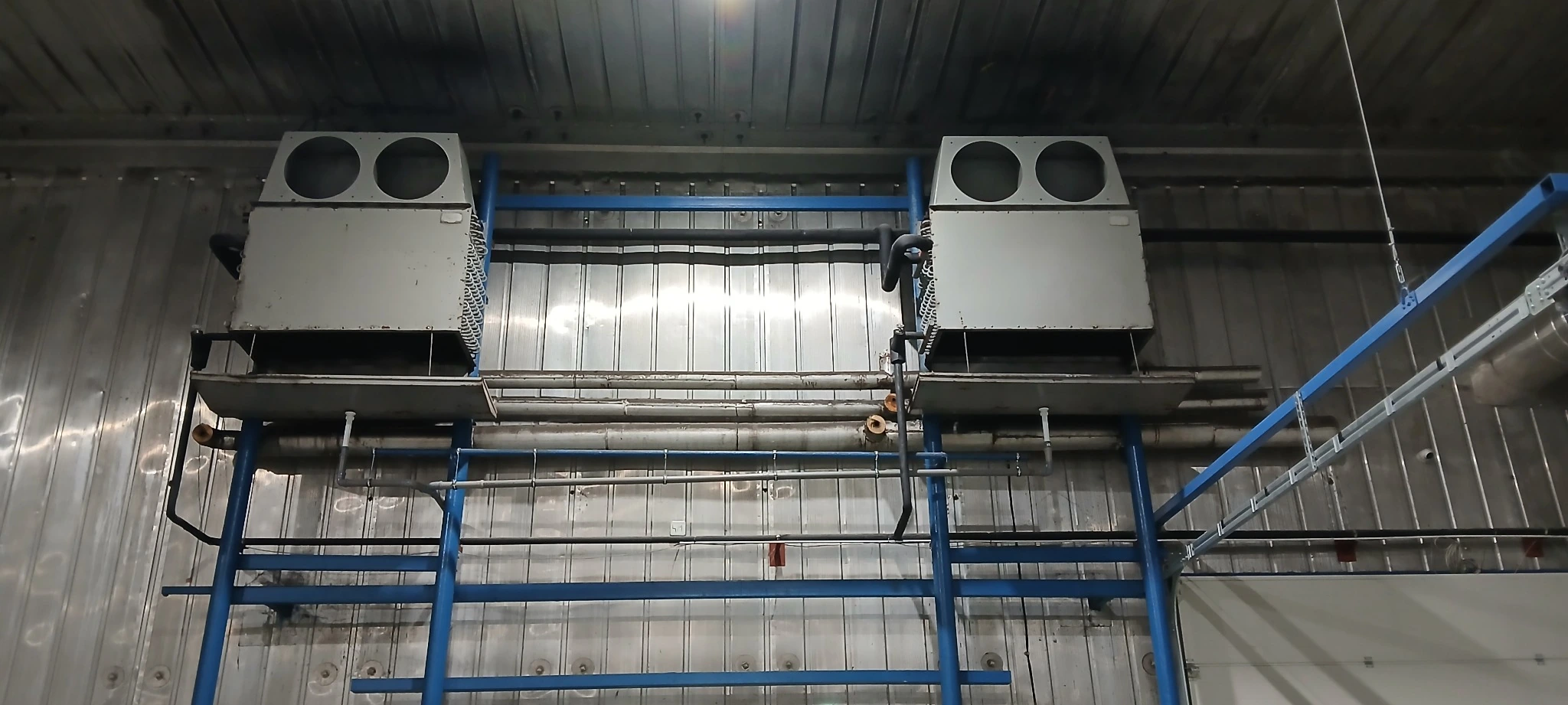
Industrial and process cooling
We work on the assessment, selection, installation and modernisation of equipment and mechanical systems used in industrial and process cooling. Proper integration of chillers, dry coolers, cooling towers, heat exchangers and hydraulic systems affects the performance of the entire process.
The cooling duty comes first
Industrial cooling performance depends on heat-rejection equipment, fluid circuits, pumping, controls and operating loads working together. Both troubleshooting and system design therefore require an understanding of the complete installation.
Assessment can begin with incomplete data. The applicable solution is always defined by the specific system, operating parameters and site constraints.
System options
An industrial cooling system may combine several technologies. Selection needs to consider the performance and lifecycle of the complete system.
Cooling process-fluid circuits at a temperature level and duty selected for the application.
Rejecting heat to ambient air where system temperatures and operating conditions make this approach suitable.
For larger heat-rejection duties, assessed together with the water system, heat exchangers and controls.
For circuit separation, heat transfer or modifications to existing systems, with duty-specific sizing.
Using suitable ambient conditions where the required temperatures and annual operating profile justify it.
Coordinating pumps, piping, valves, buffer capacity and control points with the cooling equipment.
Complete project lifecycle
Cool Flow can coordinate the complete cooling task from assessment through return to service, followed by maintenance and modernization. Specialist trades and contractors are coordinated according to project requirements.
Existing systems
Insufficient cooling capacity, unstable process temperatures or recurring failures can have several causes. A site assessment helps establish whether repair, cleaning, hydraulic modification, equipment replacement or wider system changes are appropriate.
New installation and system integration
For new industrial cooling projects, equipment selection must be coordinated with mechanical connections, controls, site constraints and process requirements. Thorough technical preparation can reduce uncertainty during installation.
Specialist project trades can be organized under Cool Flow’s technical coordination, using professionals suited to the specific scope.
We undertake industrial and process cooling projects throughout Hungary.
System connections
Industrial cooling duties often connect the cooling tower, heat exchanger, water treatment, pumps and final heat-rejection or cooling equipment. We therefore assess the complete heat and fluid path rather than isolated units.
Related Cool Flow capabilities
Service, refurbishment, installation and complete lifecycle support.
Assessment, cleaning, refurbishment, parts and replacement.
The relationship between deposits, scale and water-side condition.
Technical condition assessment and preparation of an intervention route.
System-matched components and technical sourcing.
Technical selection and project-based sourcing of industrial piping components.
Technical enquiry
Looking to resolve a cooling performance issue, modernise an existing installation or develop a new process cooling system? Send us the available operating information and a brief description of the task.
Complete specifications are not required before contacting us.
Start a technical discussion