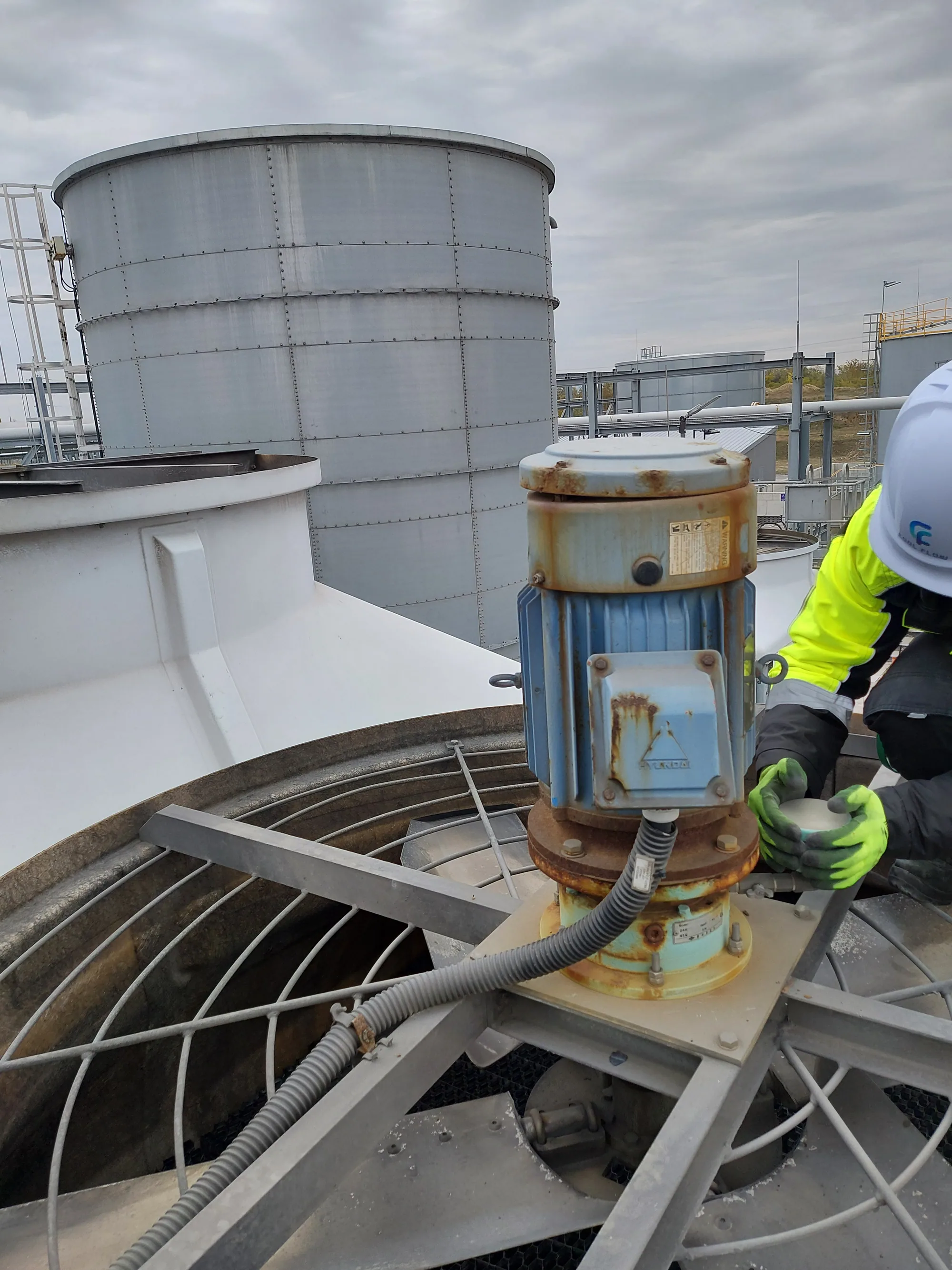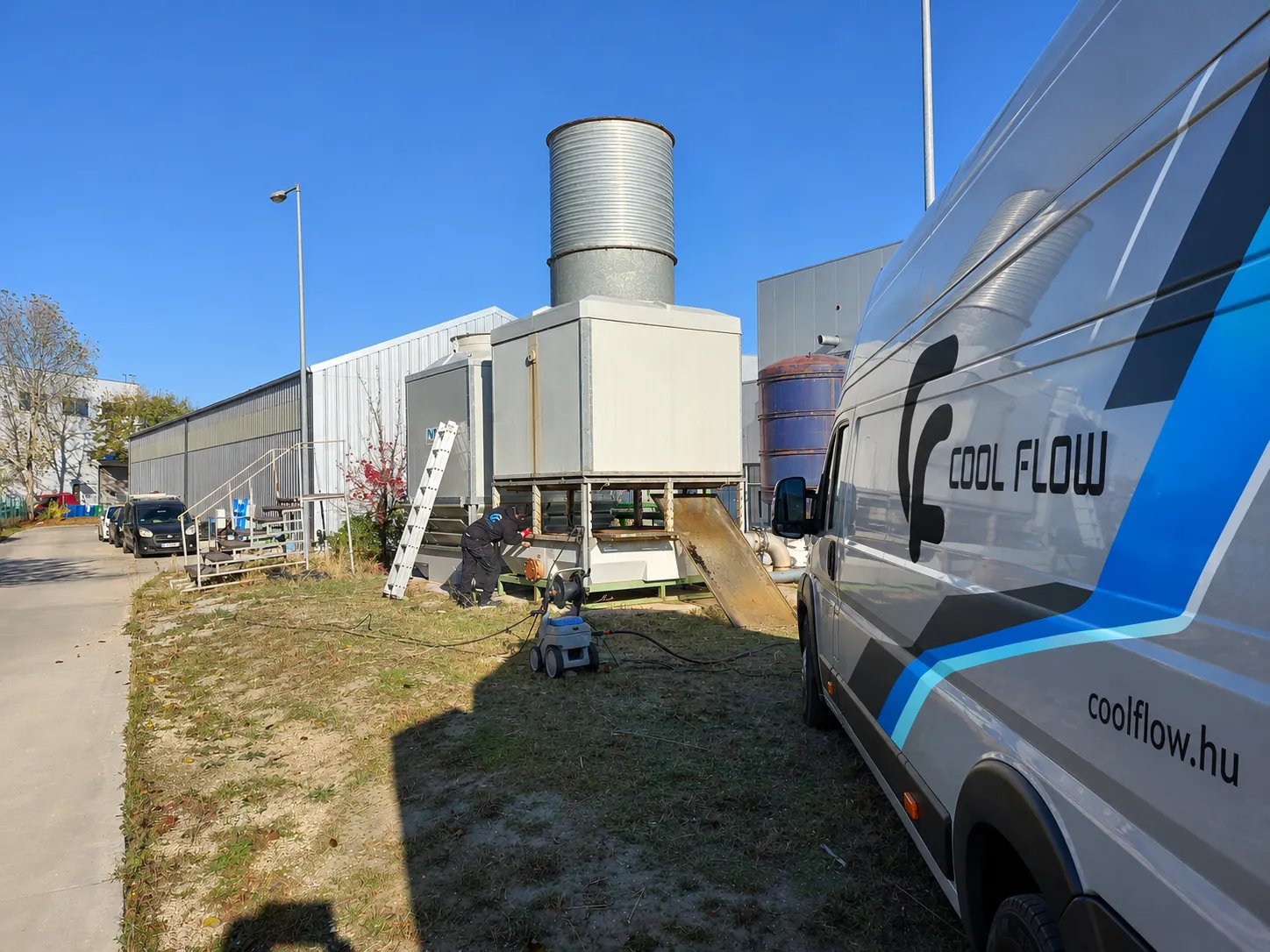
Winter preparation does not end with draining the basin or checking the heating elements. Inspecting a cooling tower outside the main season is also a good opportunity to determine the condition of the fill, drift eliminators, water distribution components and mechanical equipment in time. Issues identified in autumn can often be addressed before the spring restart.
When the first frosts arrive, the priorities of cooling tower operation change as well. Instead of summer cooling performance, attention turns to frost protection, winter operating mode and the safe shutdown of equipment.
However, winterization has another side that is at least as important.
During the summer months, shutting down an industrial cooling tower often requires substantial planning. Operational demands take priority, maintenance windows are short, and a major component replacement may require preparation beginning several weeks in advance.
Winter can finally provide an opportunity not only to operate the system, but to inspect it thoroughly as well.
Frost is indiscriminate: basin, pipework, pump and heating element
The first task in preparing a cooling tower for winter is to determine how the equipment will operate during the cold months.
Will the tower be completely shut down? Does the process still require cooling in winter? Or is it a closed-circuit fluid cooler that can operate in dry cooling mode under suitable conditions?
Each answer entails a different set of tasks.
For equipment that is shut down, draining in accordance with the manufacturer’s instructions and checking drain points, trapped water sections and outdoor pipework are essential. The risk of freezing does not disappear simply because the basin appears to be empty.
During wet winter operation, it may be particularly important to check:
- the operation of basin heaters and heating elements;
- thermostats, temperature sensors and protective devices;
- frost protection for pumps, pipework and water level control;
- adequate water circulation and the correct control sequence;
- areas prone to icing and the airflow pattern.
An important distinction: basin heating does not automatically protect the water in the pump, pipework or heat exchanger coil of a closed cooling circuit. Frost protection must be designed for the entire system.
Changing to dry operation: switching off the spray pump is not enough
Under suitable outdoor temperature and operating conditions, certain closed-circuit fluid coolers can reject heat without using spray water. In this mode, cooling is provided by heat transfer between the air and the heat exchanger.
This is not applicable to every cooling tower, however, and it is not the same as completely shutting down and draining the equipment.
When changing to dry operation, checks should include the operating mode permitted by the manufacturer, the required cooling duty, drainage of the spray-water system, the conditions for fan operation and frost protection of the closed cooling circuit.
Proper protection of the process fluid circulating in the heat exchanger coil remains essential in this mode as well.
Dry operation is not a switch position; it is an operating mode matched to the design of the equipment.
What summer operation can conceal: the condition of the cooling tower fill
One of the most important components of a cooling tower is the fill, also referred to as fill media or packing. Its purpose is to provide the surface area and flow conditions required for heat and mass transfer between water and air.
During operation, however, the fill can gradually become contaminated.
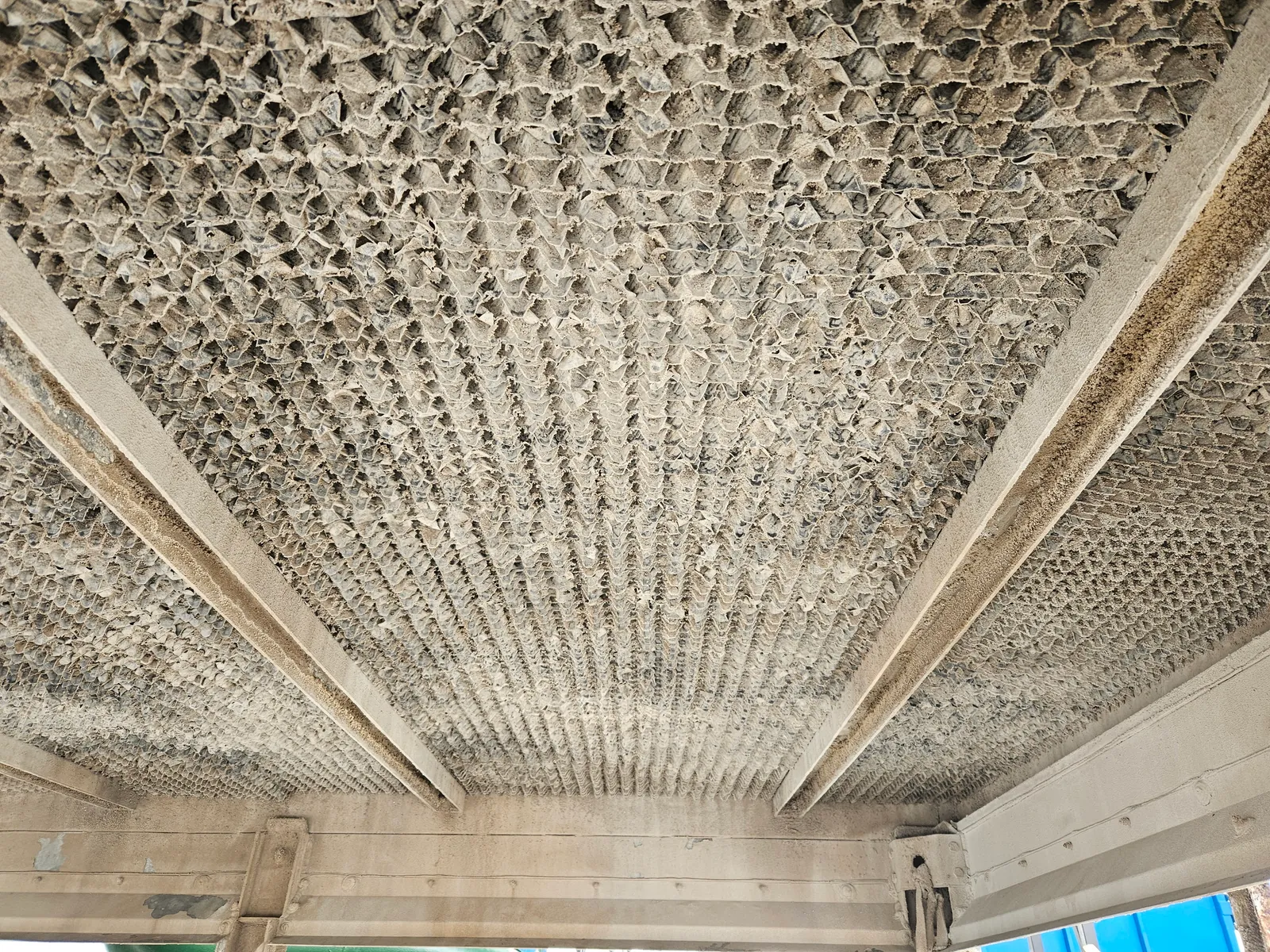
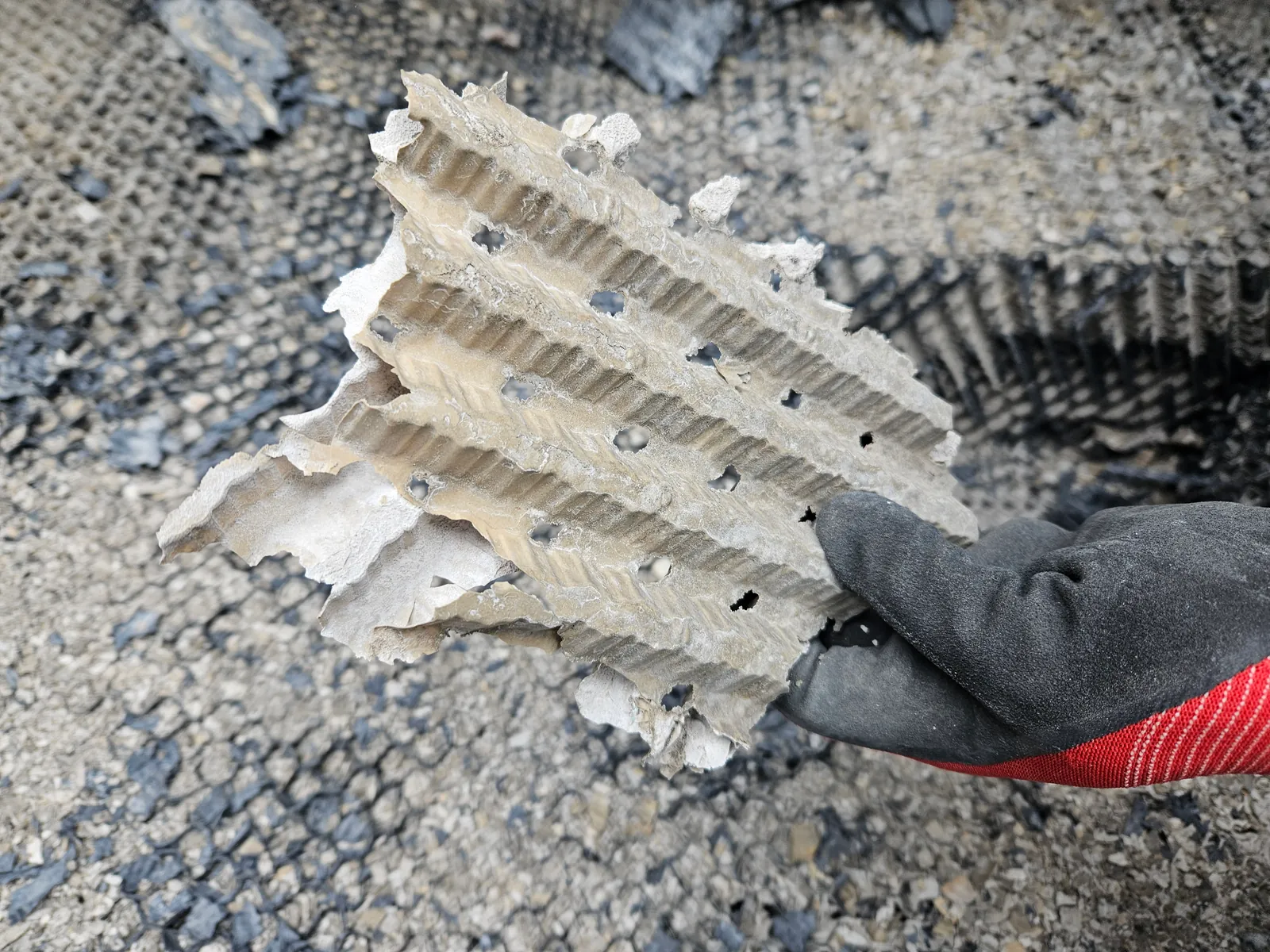
Scale, sludge, suspended matter, biological deposits and other contaminants may accumulate on it. The problem is not necessarily limited to the fill looking visibly dirty.
Deposits can restrict flow passages, make water distribution uneven and increase resistance on the air side. In more severe cases, the weight of the contamination and damage to the fill material can also create structural problems.
Possible consequences include:
- deteriorating heat and mass transfer;
- a higher leaving cooling-water temperature under the same conditions;
- less favourable airflow;
- uneven water distribution;
- increased mechanical loading;
- the need for fill cleaning or fill replacement.
It is not possible to state as a general rule exactly how many percentage points of cooling tower performance are lost because of a few millimetres of deposits. Such a calculation would require knowledge of the fill geometry, water and air flow rates, the nature of the deposits and the operating condition.
One point is certain: heavily blocked fill cannot be expected to perform in the same way as fill that is in suitable condition and selected for the specific equipment.
Cleaning or fill replacement? The distinction matters
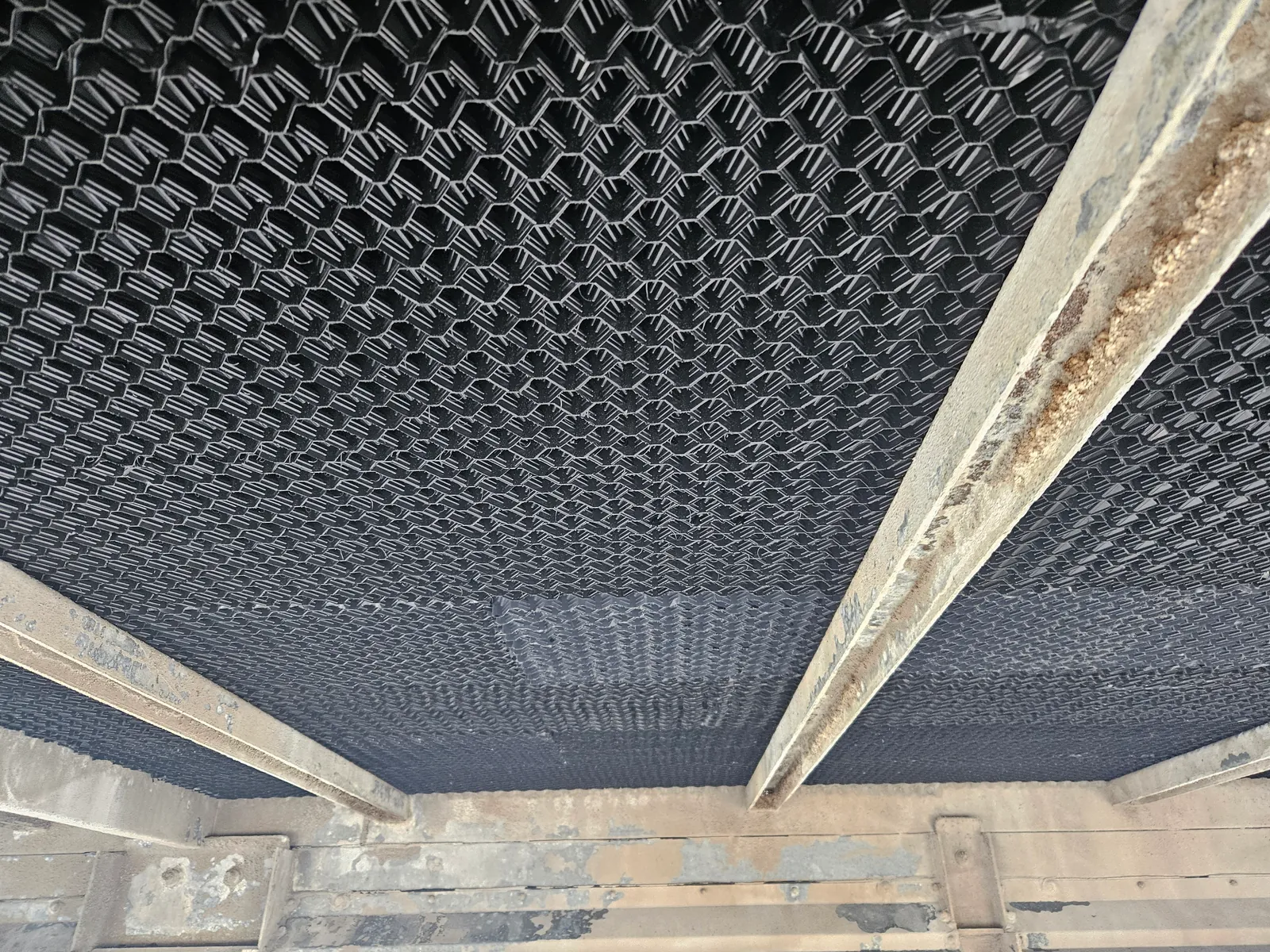
Contaminated fill is not beyond recovery in every case. Certain deposits can be removed with an appropriate process, provided that the material, design and mechanical condition of the fill allow it.
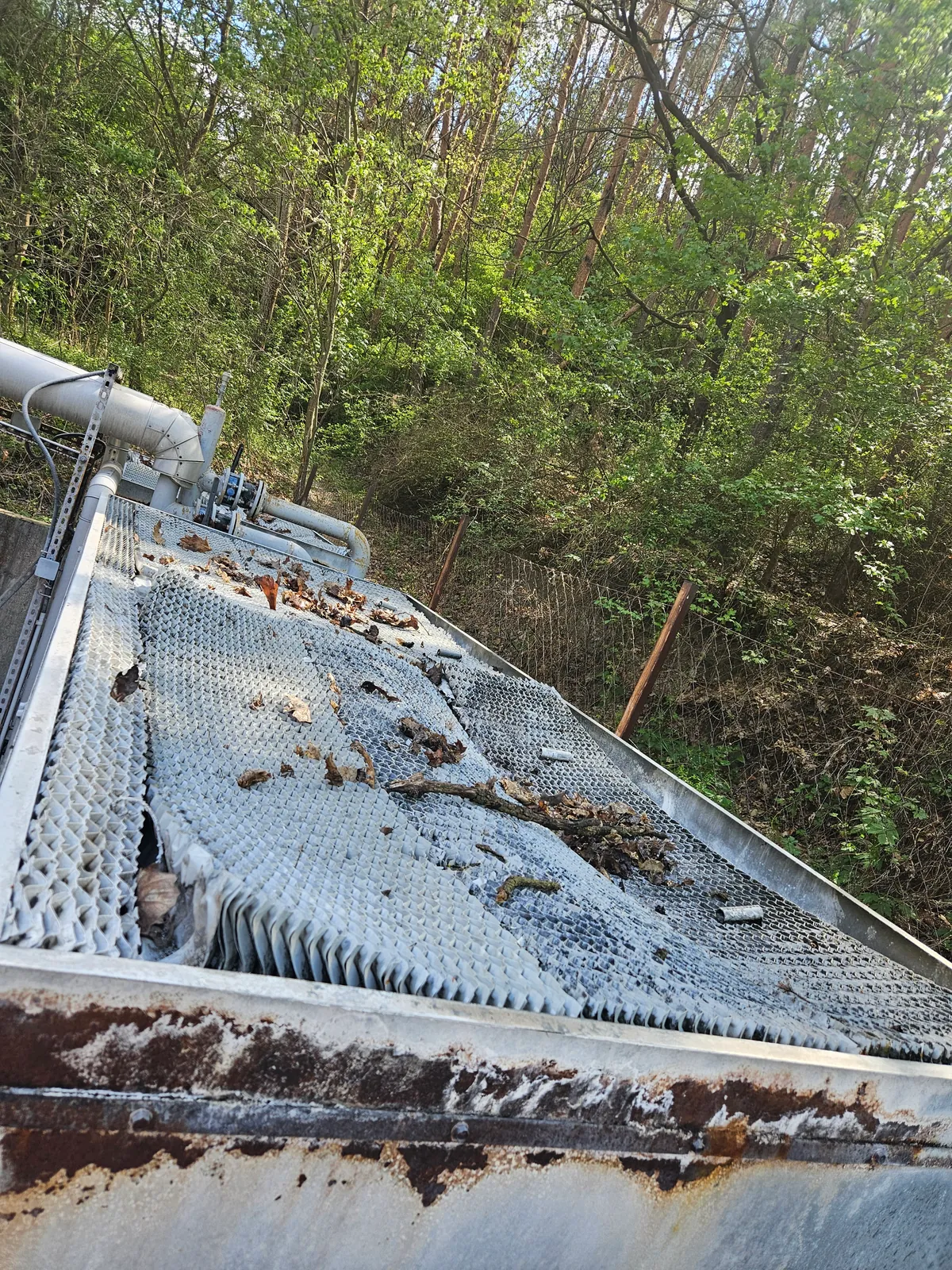
The situation is different if the elements have deformed, become brittle, broken, collapsed or become blocked to such an extent that cleaning would no longer provide an adequate result.
In that case, fill replacement may be the technically reasonable solution.
Selecting suitable replacement fill requires more than measuring its external dimensions. The tower design, flow directions, water quality, operating temperature, hydraulic and aerodynamic characteristics, and the installation method must all be considered.
Cool Flow can assist with sourcing suitable fill for cooling towers of various makes and designs, as well as arranging custom manufacture.
Do not leave the drift eliminator out of the inspection
The purpose of the drift eliminator is to reduce the amount of water droplets carried away by the airflow. It is not a secondary component, but an important part of correct wet cooling tower operation.
A broken, displaced, incomplete or significantly contaminated drift eliminator compromises droplet separation. Increased water carryover can cause water loss and unwanted wetting around the equipment, and may also increase risks associated with aerosol emissions.
Deformed or poorly secured elements are worth addressing even while the tower is not operating wet. A dry period does not repair a damaged component: the same problem may confront the operator at the next wet start.
During a winter condition assessment, it is therefore advisable to inspect the condition of the drift eliminators, air inlet louvres and water distribution nozzles as well as the fill.
Assess in winter and restart prepared in spring
For major component replacements, installation itself is often not the only time-consuming task.
The existing component must be identified, its dimensions and installation conditions assessed, and then a suitable replacement element must be selected or manufactured.
This is particularly true for specialised fill, drift eliminators, air inlet louvres and water distribution components.
If the assessment is carried out only when the cooling tower is already due to restart in spring, there may be too little time for procurement and installation.
The advantage of a winter assessment is that the necessary components can be ordered before the spring restart, while the timing of service work can also be agreed in advance.
This is more than a matter of convenience. When cooling demand is higher during the warmer months, it is much more difficult to fit an overdue major overhaul into the operating schedule.
A condition assessment looks beyond the fill
The technical condition of a cooling tower should be evaluated by considering the complete system.
Depending on the equipment type and accessibility, the assessment may cover the fill and drift eliminator elements, water distribution, basin, pumps, fan, drive, fasteners, corrosion condition and frost-protection fittings.
A worn component may cause a problem on its own, but the true condition can only be judged by understanding the relationships within the system.
The objective is not to find something to replace in every item of equipment. It is to determine which components can remain in service, what can be cleaned or repaired, and what should be replaced before the next operating season.
Preparation for next summer’s load starts now
Cooling tower performance is influenced by the combined effects of outdoor conditions, water quality, airflow, water distribution and the condition of internal components.
During periods of high summer cooling demand, every unnecessarily lost margin of performance may matter, especially when the equipment is already operating close to its available capacity.
Winterization can therefore be about more than preventing frost damage.
A condition assessment carried out now can lead to spring component procurement, a planned fill replacement, improved water distribution and better-prepared summer operation.
Cool Flow can assist with the identification, sourcing and custom manufacture of cooling tower fill, drift eliminators, air inlet louvres, nozzles and other related components, as well as with preparing the necessary service work.
Do not wait until spring to discover that the cooling tower is waiting for parts
If the equipment is approaching a winter shutdown or a change of operating mode, now is a good time to inspect the condition of its internal components.
Send us the cooling tower manufacturer and type, a few photographs and a short description of the planned task. We can then discuss the next steps for an on-site assessment, component procurement and the required service work.
Technical consultation: info@coolflow.hu
Telephone: +36 20 968 8808