
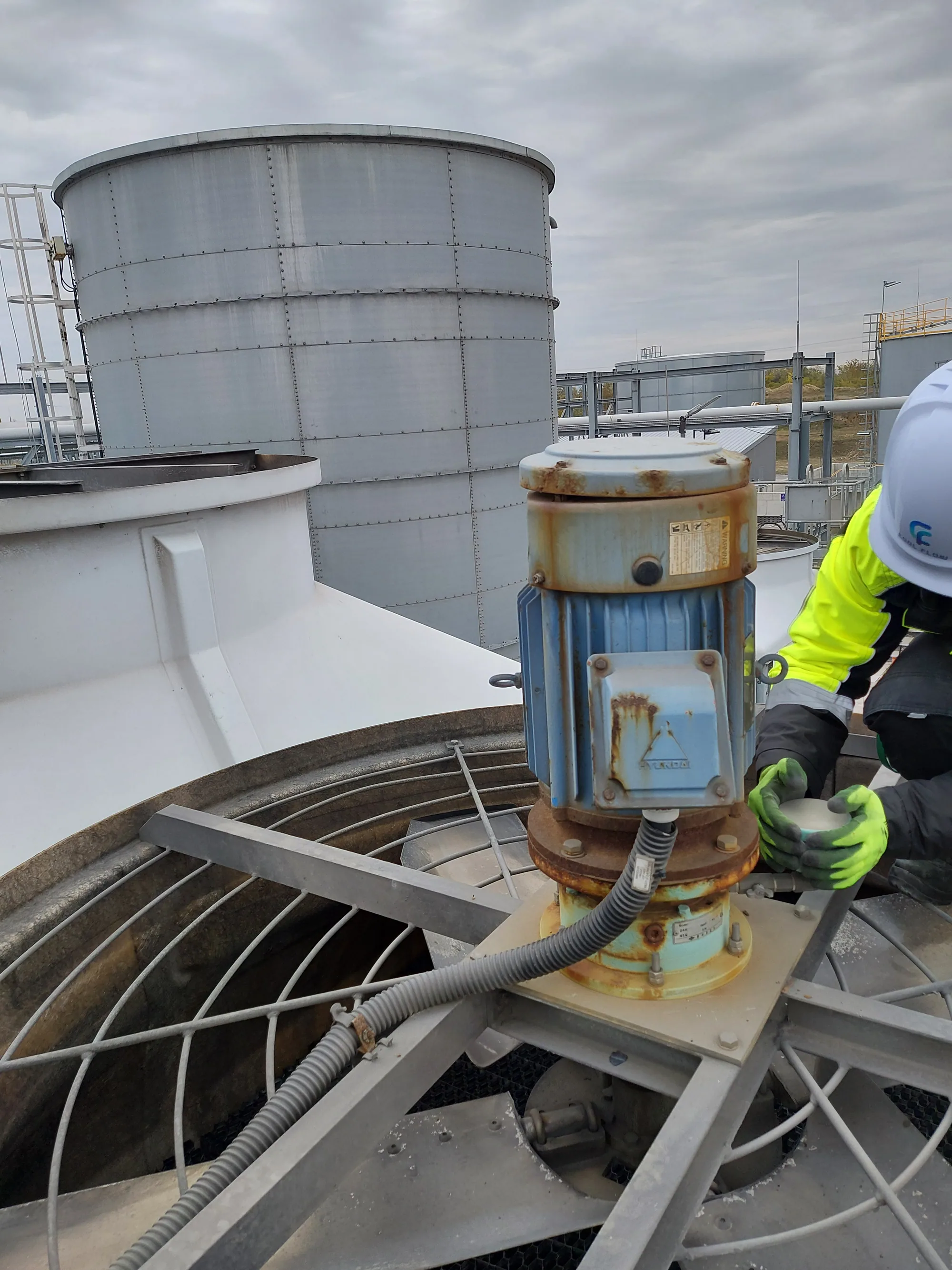
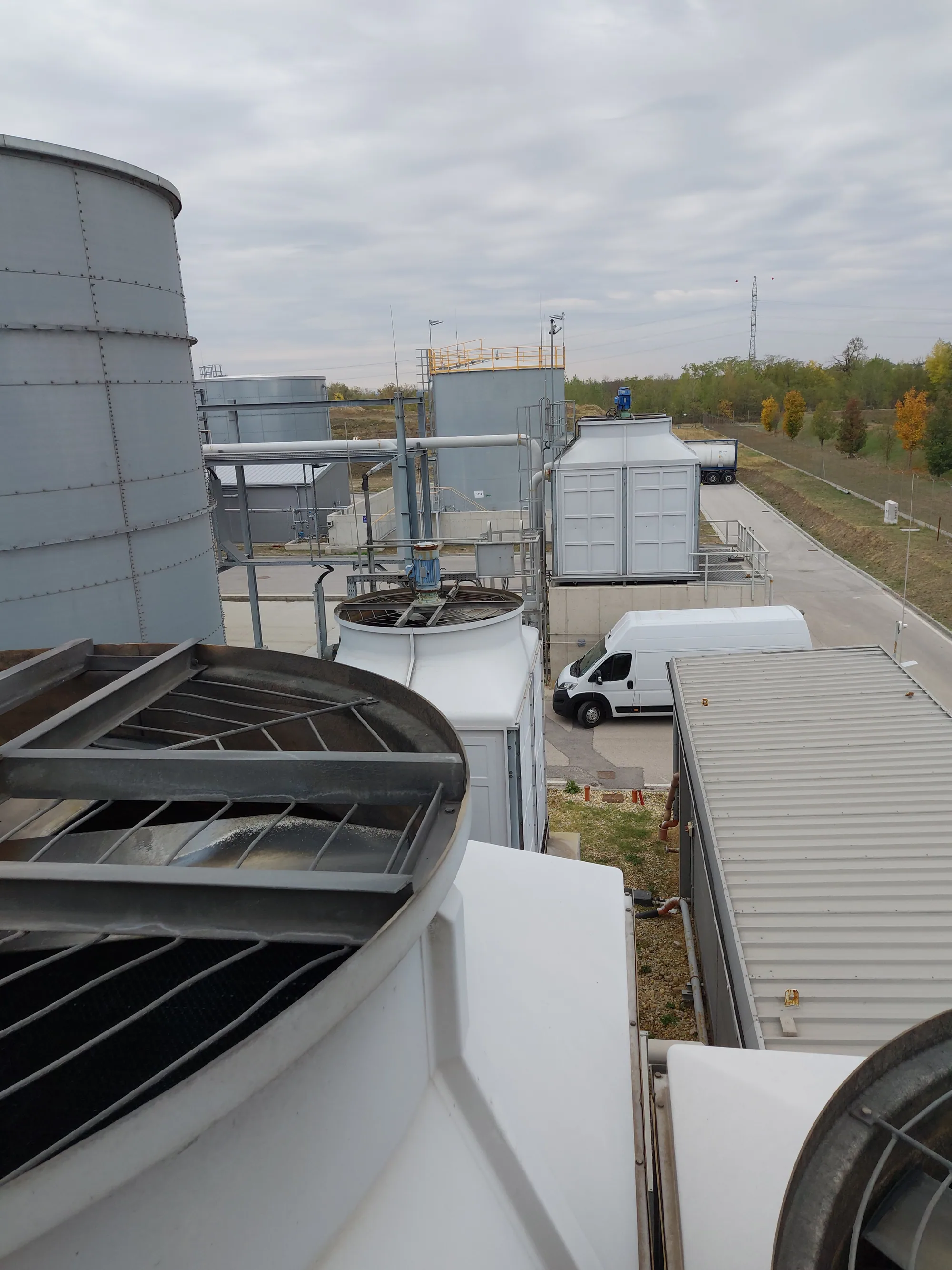
Industrial cooling towers play a critical role in the cooling processes of many production facilities and technological systems.
Continuous operation, mechanical loads, a wet environment and exposure to weather can cause the condition of this equipment to change significantly over time.
An unexpected failure can compromise cooling performance and may also lead to costly repairs, production downtime and occupational safety risks.
During an autumn on-site condition assessment, Cool Flow specialists documented several defects that clearly illustrate the value of regular inspections. The client and facility remain anonymous.
Why regular cooling tower condition assessments matter
Assessing the technical condition of a cooling tower requires more than an external visual inspection of the equipment.
A comprehensive assessment should cover the fan assemblies, electric motors, gearboxes, lubrication systems, support structures, fasteners and any visible corrosion damage.
The purpose of preventive cooling tower maintenance is to identify developing problems before they cause an unexpected shutdown or major component damage.
The findings of regular inspections allow operators to plan the required interventions, prioritise urgent repairs and reduce the risk of unplanned downtime.
Dried gearbox oil and an empty reservoir – serious warning signs
Reliable operation of cooling tower fan gearboxes depends on correct lubrication.
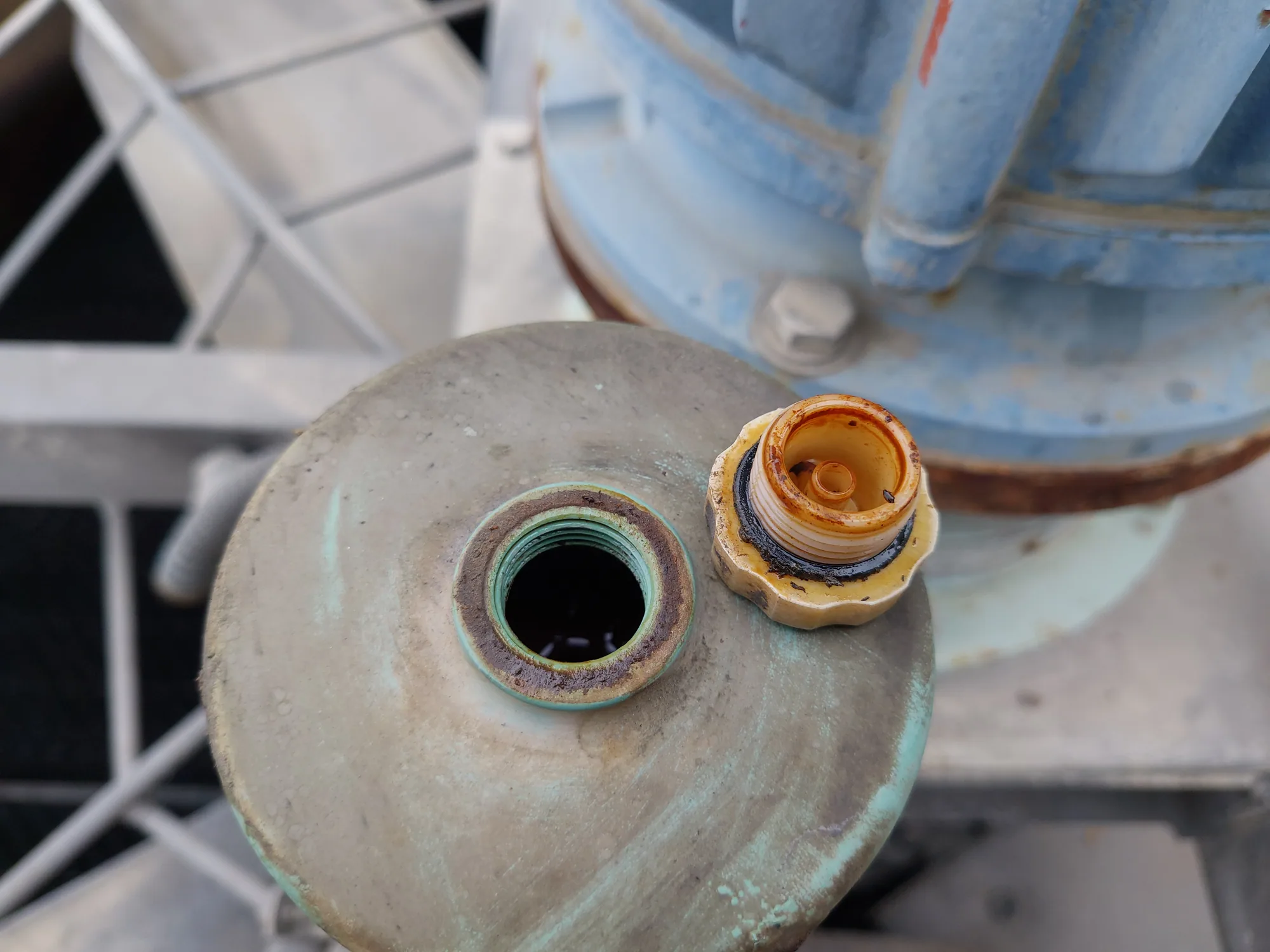
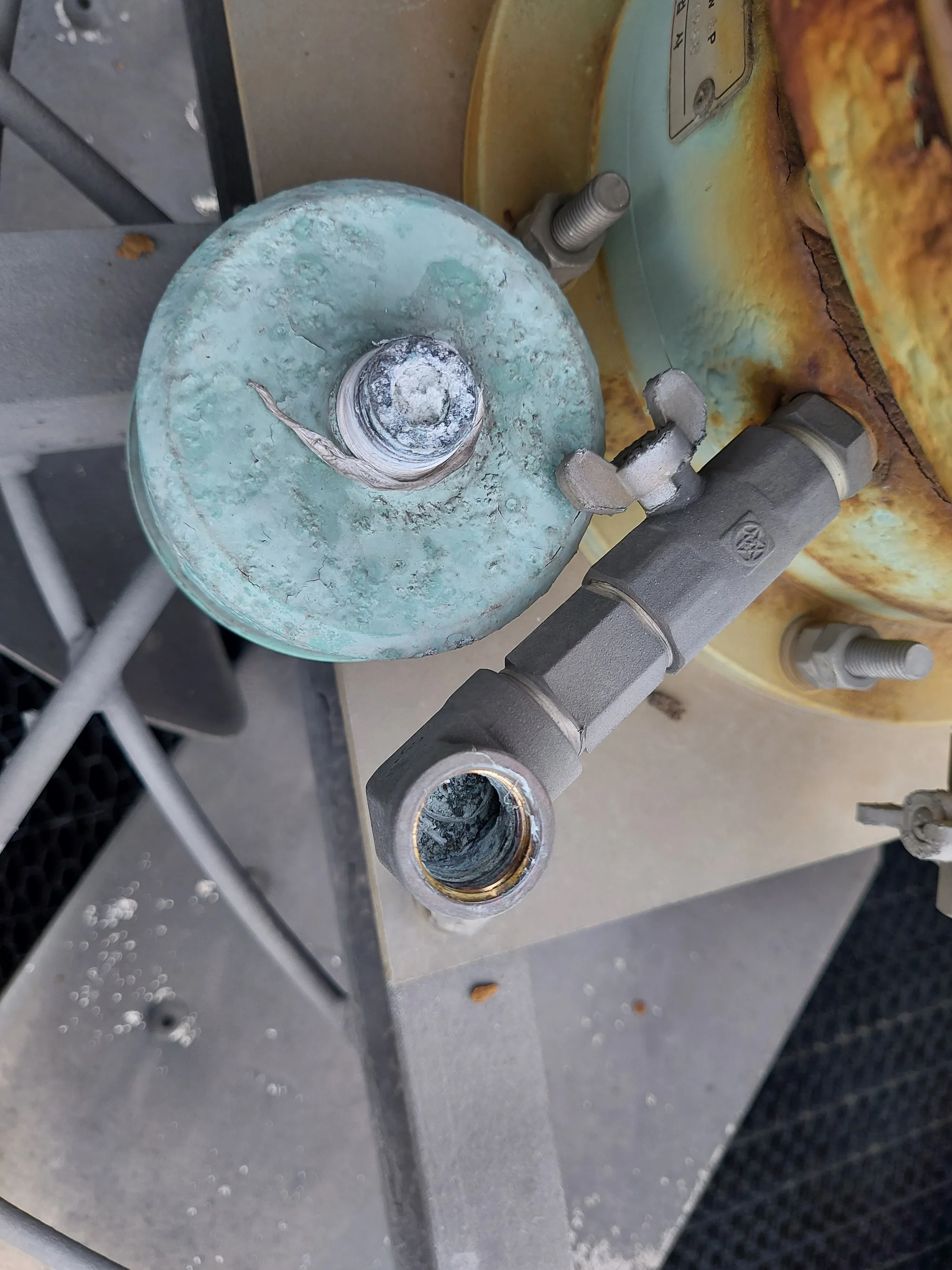
During the on-site inspection, we found dried and hardened oil residue in one lubrication reservoir, while another reservoir was completely empty. These conditions warrant a detailed inspection of the lubrication system and investigation of the underlying causes.
Inadequate lubrication can lead to accelerated wear, bearing damage, overheating, abnormal noise, vibration and, ultimately, gearbox failure.
A visual check of the reservoir alone is insufficient. The condition of the associated lines, connections and fittings must also be checked, together with the oil supply specified by the equipment manufacturer.
Addressing a lubrication issue detected in time may require a substantially smaller intervention than repairing or replacing a severely damaged cooling tower gearbox.
Corroded motor covers – a genuine safety risk
The wet, humid operating environment of cooling towers, together with weather and other environmental exposure, can promote corrosion damage.
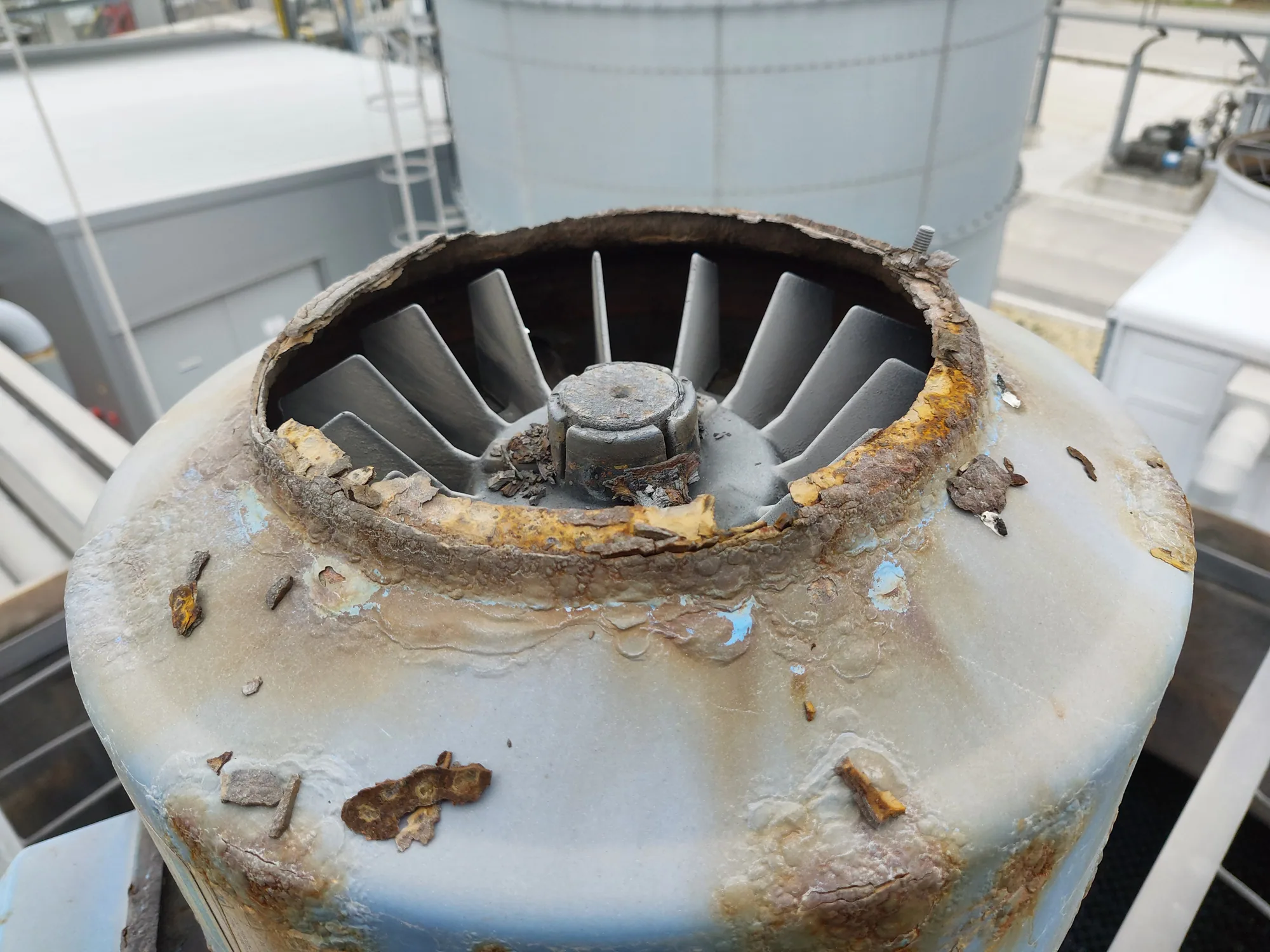
Advanced corrosion was visible on several electric motor covers at the inspected equipment. In one case, the material had deteriorated to the point that part of the cover detached and fell into the fan section. This is more than a cosmetic issue.
A foreign metal object reaching the rotating fan blades could have caused blade damage, loss of balance, a significant increase in vibration, further mechanical failure or the hazardous ejection of components.
In an extreme case, detached or ejected parts could also have endangered people near the equipment. No fan blade damage or personal injury was documented at the site; these are potential consequences of the condition that was found.
The case demonstrates how an apparently straightforward corrosion issue can have serious consequences if it is not identified and addressed in time.
Vibration measurement in cooling tower fan condition monitoring
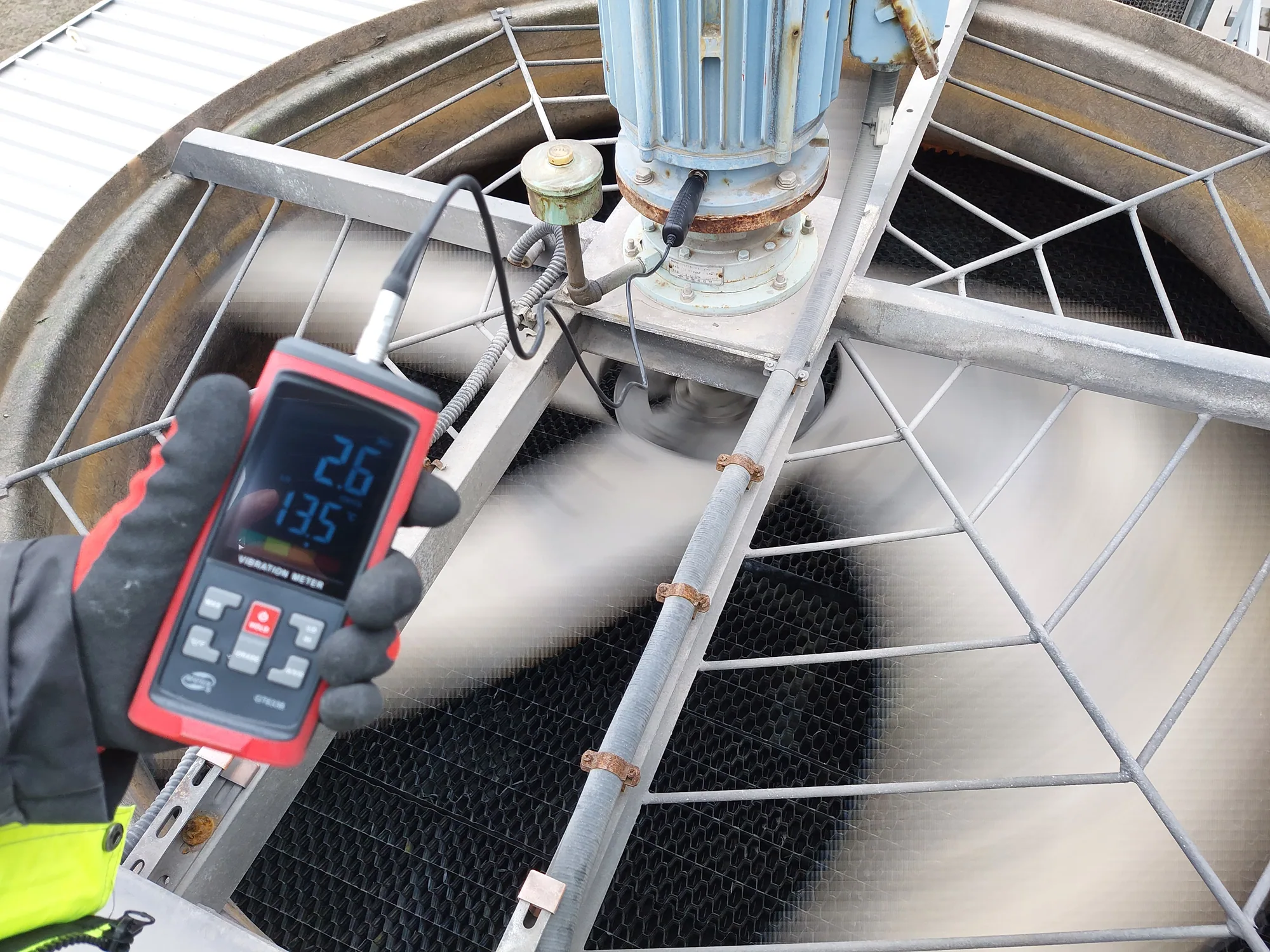
Vibration diagnostics is an important tool in the condition assessment of rotating machinery. Examining the vibration characteristics of fan assemblies can help identify abnormal mechanical conditions.
Changes in vibration behaviour may indicate, among other possibilities, imbalance, bearing defects, loose fasteners, alignment issues or gearbox-related abnormalities.
Measurements taken regularly under comparable conditions can be particularly useful because they allow changes in equipment condition to be tracked over time.
Vibration results must always be evaluated with regard to machine design, rotational speed, measurement point and operating conditions.
Instrumented vibration measurement formed part of the on-site assessment. No specific fault can be concluded from the measured values without a verified evaluation.
Digital on-site documentation and planned maintenance
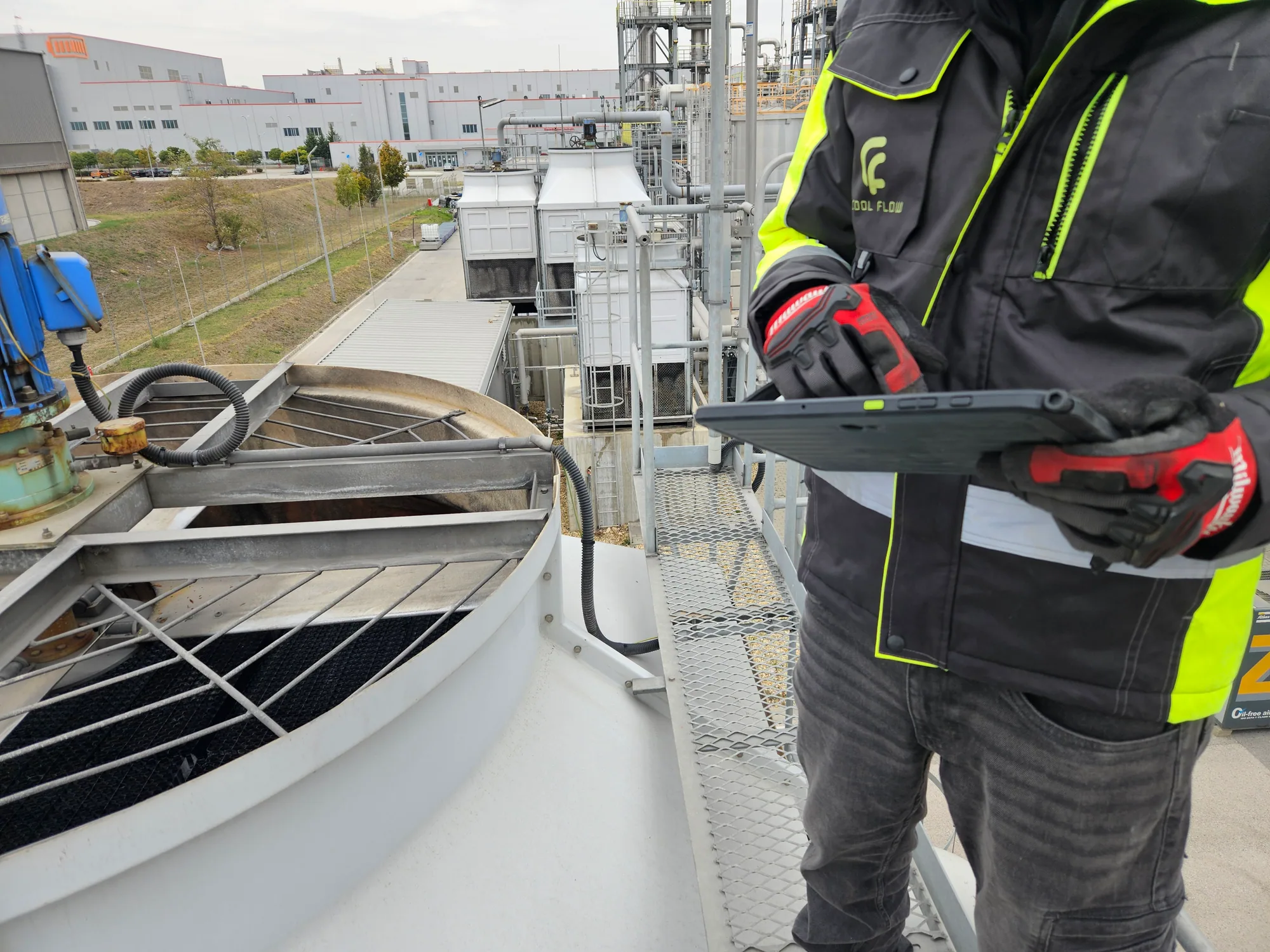
Accurate, traceable documentation of identified defects is a foundation of an effective maintenance strategy.
Organising photographic condition records, measurement results and technical observations helps operators establish an appropriate order of priority for the required repairs.
Digital data collection on site can make future condition assessments easier to compare and support more effective maintenance planning. Documentation is especially valuable when equipment condition is tracked over an extended period.
Autumn cooling tower maintenance and winterization
Autumn is a particularly important time to review the technical condition of cooling towers. As colder weather approaches, normal mechanical checks should be complemented by close attention to freeze protection, the water distribution system, control functions and operating conditions.
The correct approach to winter operation always depends on the type and technical design of the cooling tower and on the requirements of the particular process.
Preventive maintenance can help reduce the risk of unexpected failures during cold weather.
- Inspect the fans, gearboxes and motors.
- Review the condition of lubrication systems.
- Inspect corrosion damage and fasteners.
- Check water distribution systems and nozzles.
- Review freeze-protection and, where required, drainage arrangements.
- Check winter operating controls and control logic.
- Assess water-treatment conditions and deposits.
Why can preventive maintenance pay off?
The cost of an industrial cooling tower failure is often not limited to repairing a single component.
Loss of cooling capacity, possible production restrictions, emergency repairs and associated occupational safety risks can all have significant consequences.
The on-site findings presented here demonstrate how an empty oil reservoir, a neglected lubrication system or a corroded motor cover can develop into a more serious technical problem over time.
Regular condition assessments create an opportunity to identify defects early, plan the necessary interventions and maintain the operational reliability of the cooling system.